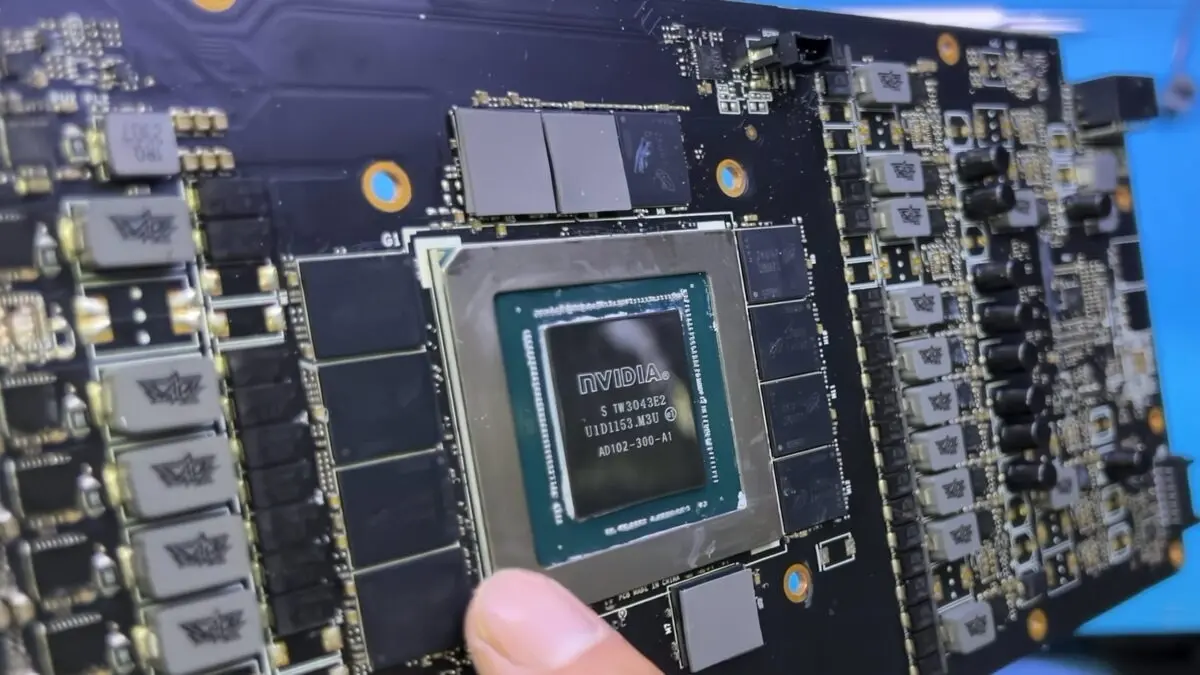
A secondhand ASUS GeForce RTX 4090 sold in China turned out to be a hollow shell rather than a functional graphics card. The buyer purchased the broken unit for 1,500 RMB (around $221) CNY (around $221) from a local market, expecting to repair or resell the high-end component. Disassembly revealed that the core of the card contained no silicon at all. Instead, a piece of plastic molded to resemble a GPU die sat on the circuit board. This discovery highlights a sophisticated scam targeting buyers looking for discounted flagship hardware.
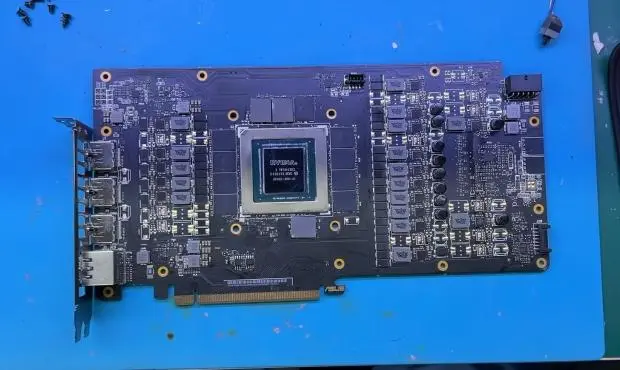
Disassembly of a cheap secondhand unit reveals hollow construction
The fake card carried markings designed to mimic genuine NVIDIA components. Stickers on the plastic die claimed the chip was an AD102-300-A1, the actual silicon used in the RTX 4090. The date code printed on the fake die was set to 2030, an impossible timestamp that signaled immediate fabrication. These visual cues are the primary way scammers attempt to pass off counterfeit parts as authentic. The exterior appearance was convincing enough to fool the initial inspection before the board was opened.
- Die Material: Plastic with fake markings
- GPU Markings: Fake NVIDIA AD102-300-A1
- Memory: Scrap chips (non-functional)
- Purchase Price: 1,500 RMB ($222)
Beyond the fake processor, the memory modules on the card were also non-functional. The chips placed on the board were scrap pieces with no actual storage capability. They served only to make the printed circuit board look complete and professional. A repair technician confirmed that the card had zero functional compute capability. It could not process graphics data or output a display signal under any circumstances.
The price of 1,500 RMB (around $221) was a fraction of the standard retail cost for an RTX 4090. Such a steep discount served as a major warning sign for potential buyers. Genuine high-end GPUs rarely drop to these levels unless they are damaged beyond repair. This incident provides a clear example of how scammers exploit the high value of flagship graphics cards. Buyers should remain skeptical of deals that seem too good to be true on the secondary market.
Source: TweakTown