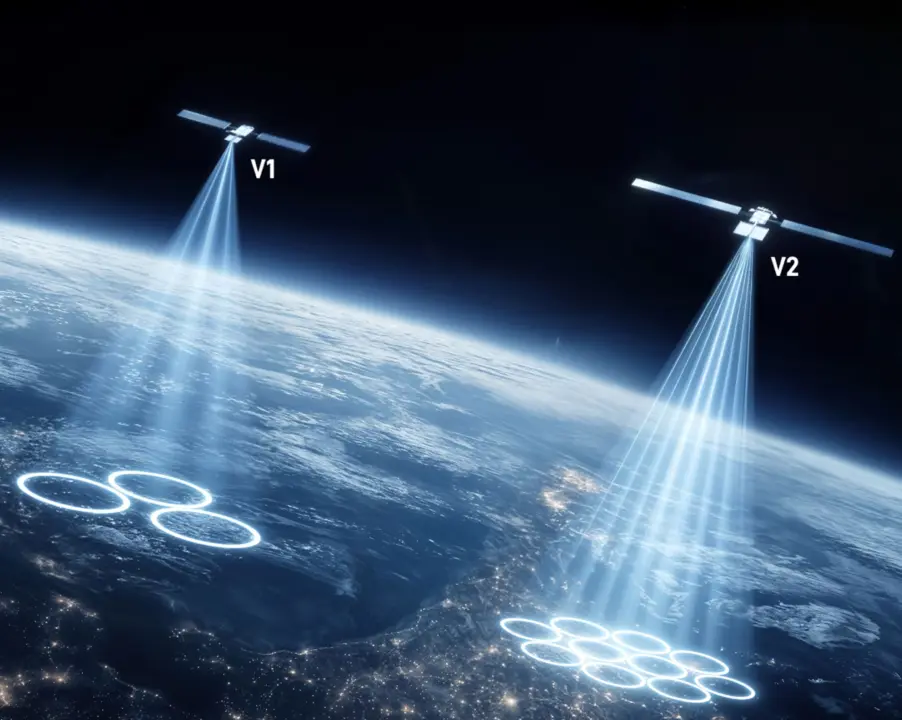
Starlink Mobile gets FCC approval to launch 15,000 next-generation satellites for direct-to-device service. This regulatory green light allows SpaceX to compete directly with major US carriers like AT&T, T-Mobile, and Verizon. Smartphone users gain a new option for cellular connectivity that does not rely on traditional terrestrial towers. The waiver permits wireless service without requiring SpaceX to lease spectrum from existing terrestrial providers.
FCC grants waiver for 15,000 satellites to deliver 150Mbps direct-to-device speeds
The new constellation operates in low Earth orbit between 326km and 335km above the planet. SpaceX plans to use ground-based femtocells to extend coverage into suburbs and cities. This infrastructure shift supports the goal of delivering 5G speeds of up to 150Mbps per user. That target speed is significantly higher than the current ~4Mbps service offered by existing T-Satellite systems.
SpaceX acquired the necessary spectrum from EchoStar for about $17 billion. The company can only test on these EchoStar frequencies until the acquisition closes on 30 November 2027. The approved frequency bands for US service include 1695 to 1710MHz, 1915 to 1920MHz, 1995 to 2000MHz, 2000 to 2020MHz, and 2180 to 2200MHz. These allocations define the radio frequencies the satellites will use to communicate with mobile devices.
We previously covered SpaceX Starlink Gen3, which proposes 100,000 satellites for AI connectivity. This current approval focuses specifically on the smaller 15,000-satellite count for immediate cellular service. The FCC decision marks a major step in SpaceX's strategy to bring broadband directly to phones. The service remains subject to the November 2027 deadline for full spectrum integration.
Source: NotebookCheck
Discussion
0 comments