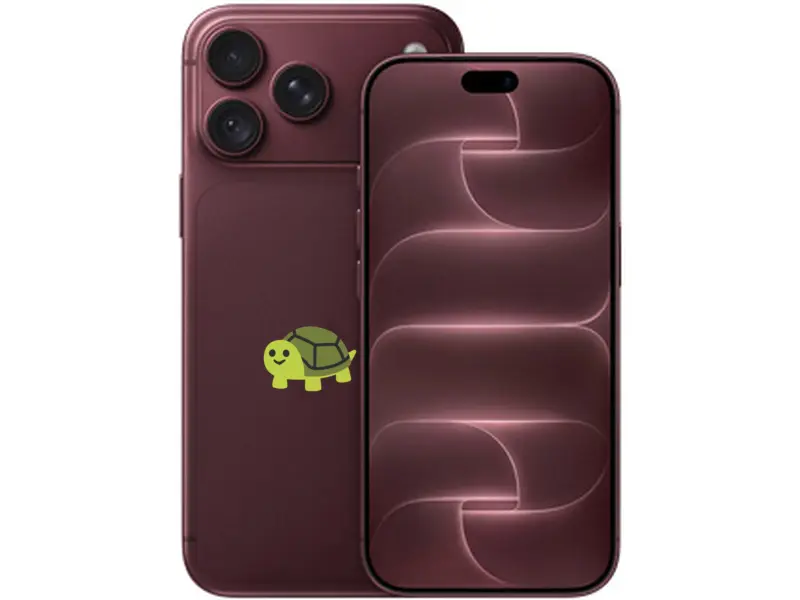
Apple’s iPhone 18 Pro Max introduces a significant shift in internal storage architecture that directly impacts heavy data users. The device switches from the faster TLC NAND found in the standard iPhone 18 Pro to slower QLC (Quad-Level Cell) NAND for its 1TB model. This change allows Apple to offer higher capacity on the same physical chip size, but it comes at the cost of sustained write speeds that fall below many budget microSD cards under load. Buyers who frequently export large video files or perform heavy backups should expect noticeable slowdowns when the storage fills up.
HOMOLAB tests reveal severe QLC NAND slowdowns as cache exhausts
HOMOLAB tested the 1TB iPhone 18 Pro Max to measure how this QLC technology performs under real-world conditions. The testing revealed that the QLC storage is inherently slower and less durable than the TLC storage used in the regular iPhone 18 Pro. Each QLC cell must distinguish between more voltage states to store more bits, which reduces speed and endurance compared to the three-state TLC design. This architectural difference explains why the high-capacity model struggles more than its lower-capacity siblings during intensive tasks.
iPhone 18 Pro Max 1TB Storage Performance
- SLC Cache (Empty): ~250 GB
- Sustained Write (Empty): 79.4 MB/s avg
- Sustained Write (Min Empty): 25.6 MB/s
- Sustained Write (60% Full): 45 MB/s avg
- Sustained Write (Min 60% Full): 1.1 MB/s
Performance benchmarks show a sharp decline in write speeds once the drive's SLC cache is exhausted. When the drive was empty, the available SLC cache dropped to approximately 250 GB before sustained speeds fell to an average of 79.4 MB/s, with a minimum of 25.6 MB/s. Under heavy mixed read/write workloads at low queue depths, the QLC model was approximately 38% slower than the TLC model. These figures indicate that the cache mechanism provides only a temporary buffer before the slower native QLC speeds take over.
The situation worsens significantly as the storage fills up. At 60% drive capacity, the available SLC cache shrank to just 58 GB. During the raw QLC write-back stage at this capacity, speeds averaged 45 MB/s and bottomed out at a mere 1.1 MB/s. This dramatic drop means that users filling the device with media will experience severe stuttering or delays when writing new data. The steep price premium for the 1TB model is now contrasted by its inability to maintain performance levels comparable to cheaper, lower-capacity options.
We have been tracking iPhone 18 Pro Max closely and previously covered reports on iPhone 18 Pro Max Dummy Units spotted in retail stores. The current testing confirms that the final hardware delivers the QLC storage configuration hinted at by earlier leaks. This hardware review highlights a clear trade-off between capacity and speed in Apple's latest flagship. The device remains a high-end smartphone, but its storage behavior requires careful management for power users.
Source: NotebookCheck

Discussion
0 comments