DLSS Super Meat Boy 3D update adds DLSS and FSR support alongside crossover character GAMES Mass Effect Legendary Edition multiplayer restored by community mod with 66 characters and 19 maps INTEL Xiaomi Redmi Book 16 2027 swaps Core Ultra for Wildcat Lake Core 5 320 for better battery life ACCESSORIES WALLHACK SP-005 Berserk glass mousepad launches worldwide for $139 GAMES Cosplayer Maria Davydova Brings Baldur’s Gate 3’s Dark Urge to Life in Dark Fantasy Photoshoot STEAM Cleaner Company launches January 26 with four-player co-op sci-fi cleaning chaos STEAM Taskey’s Midnight Toybox turns a child’s bedroom into a deadly board game GAMES The FINALS update makes the announcer call out your actual player name AYN ODIN Ayn Odin 3 Portal handheld features 9,000mAh battery and Snapdragon Q8 for extended emulation PLAYSTATION 5 Saros adds New Game Plus and Boss Rush modes in free Zenith Update GAMES Rockstar trial ends day before GTA VI launch as union accuses studio of hiring informants NVIDIA GTA V mod NPCTalk lets players talk to NPCs in real-time using AI voice cloning GAMES Prime 1 Studio’s 10.24 kg Ryu Hayabusa statue hits $1,599 with 2028 delivery CONSOLES Xbox Job Listing Confirms Microsoft Is Still Committed to Physical Disc Distribution

JWST Detects 11.7 Billion-Year-Old Supernova in Early Universe

Owen Carter 1 min read

JWST detected a supernova from 11.7 billion years ago, offering rare insights into massive star formation in the infant universe.

NASA James Webb Space Telescope
SOFTWARE AND UPDATES

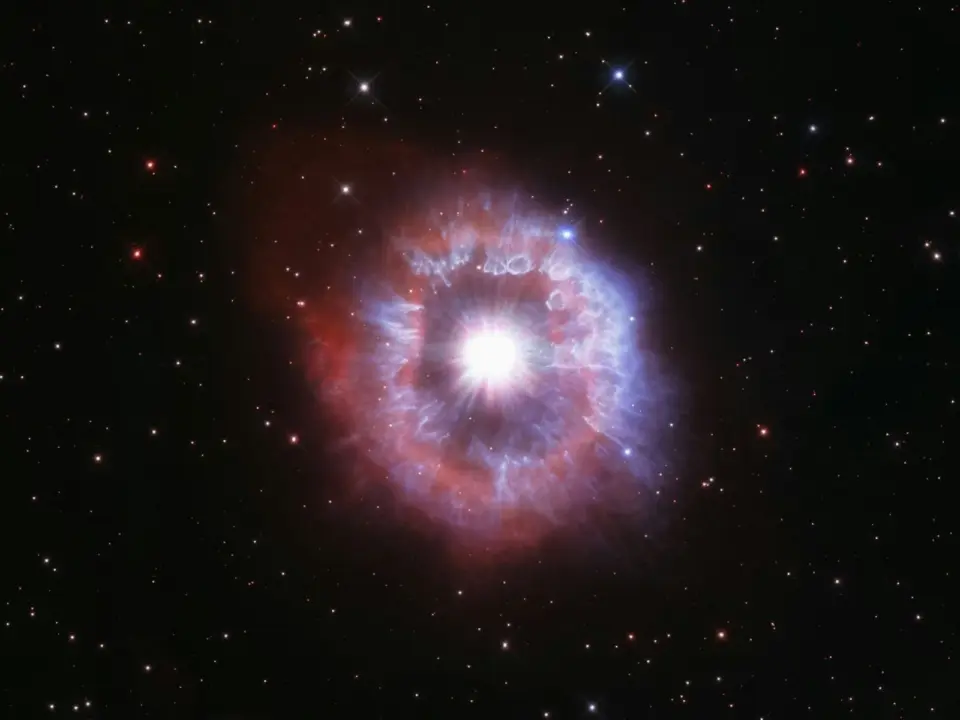
The James Webb Space Telescope has captured light from a star explosion that happened 11.7 billion years ago. This observation gives astronomers a rare look at the early universe during a period when galaxies were still forming. The data helps researchers understand how massive stars lived and died in the infant cosmos.

NASA telescope captures light from star explosion 11.7 billion years ago

NASA operates the telescope to study the history of the universe. The agency published the findings in The Astrophysical Journal. Valeria Aparicio and her team analyzed the images from the Cosmos-Web survey. Researchers identified a bright point of light that did not match known galaxy patterns.

The event occurred at a redshift of 3.195. Modeling suggests the exploding star had a mass of 12 times that of our sun. The progenitor star was likely hot and blue before it collapsed. The host galaxy is young and contains few heavy elements.

Statistical analysis indicates a 97.2 percent probability that the explosion was a Type II supernova. A Type II supernova occurs when a massive star runs out of fuel. The detection confirms that such stars existed in the early universe. The finding adds to our understanding of stellar evolution in metal-poor environments.

Source: NotebookCheck