China's CXMT is accelerating its DRAM production to challenge global market leaders, a shift that could reshape supply chains for memory modules used in PCs and mobile devices. The company plans to increase its monthly wafer starts from 40,000 in 2020 to 350,000 by the end of 2026. This rapid expansion nearly matches Micron's estimated capacity of 375,000 wafer starts per month, signaling a major change in the competitive landscape for memory manufacturers.
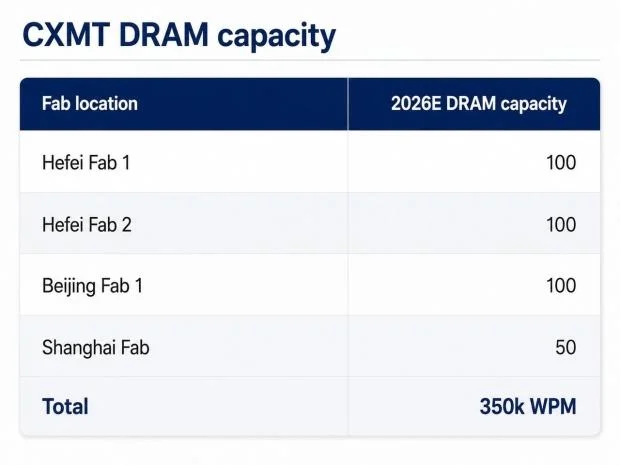
CXMT plans to increase monthly wafer starts to 350,000 by the end of 2026
CXMT achieves this scale by building cleanroom facilities in roughly 12 months, which is significantly faster than the typical 21 to 24 months required by other manufacturers. State-backed financing removes the funding constraints that often limit Western competitors, allowing CXMT to invest heavily in infrastructure without immediate profit pressures. This financial advantage supports their aggressive production targets and rapid facility deployment.
- 2020 Wafer Starts: 40,000 per month
- 2026 Projected Wafer Starts: 350,000 per month
- Micron Estimated Wafer Starts: 375,000 per month
- Cleanroom Build Time: 12 months
- 2030 Projected Wafer Starts: 950,000 per month
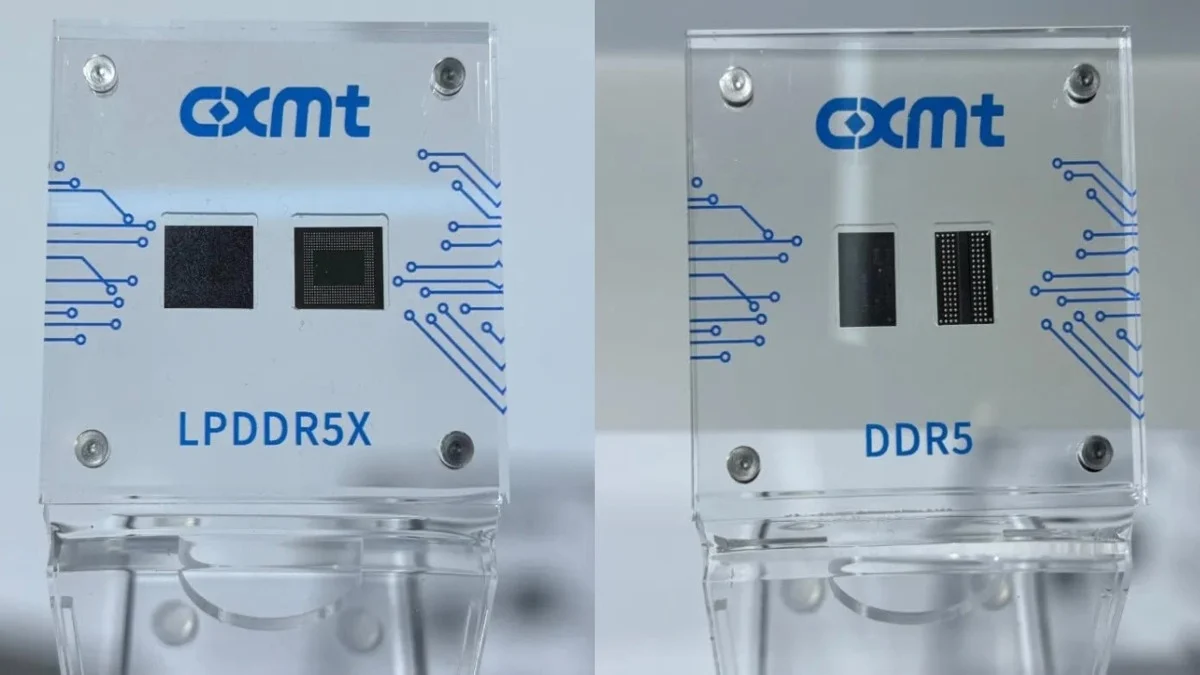
The company is already shipping 16Gb DDR5 chips running at 8,000 MT/s and LPDDR5X-10667 modules for use in consumer electronics. Brands like Corsair and Apple are currently sourcing chips made by CXMT, indicating that their products meet the quality standards for high-end applications. However, US export controls restrict CXMT from using EUV lithography, which limits their chips to older DUV multi-patterning techniques.
By 2030, CXMT alone is projected to reach 950,000 wafer starts per month, contributing to a total Chinese DRAM capacity of 1.41 million wafer starts when including JHICC, Swaysure, and YMTC. We looked at Lexar THOR II DDR5-7600 Memory Uses in our earlier Cxmt coverage to see how these chips perform in high-speed modules. This growth highlights the increasing role of Chinese manufacturers in the global memory supply chain.
CXMT's expansion demonstrates how state support and faster construction times can rapidly alter industry capacity metrics. The company's ability to produce high-speed DDR5 and LPDDR5X chips despite lithography restrictions shows technical adaptation to export controls. These developments suggest that global memory supply will increasingly rely on Chinese manufacturing capabilities in the coming decade.
Source: TweakTown