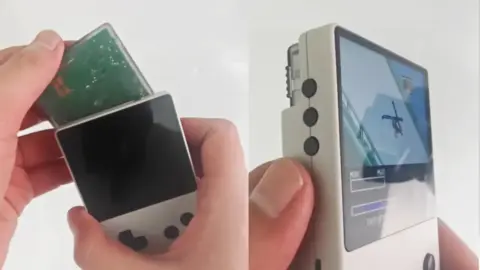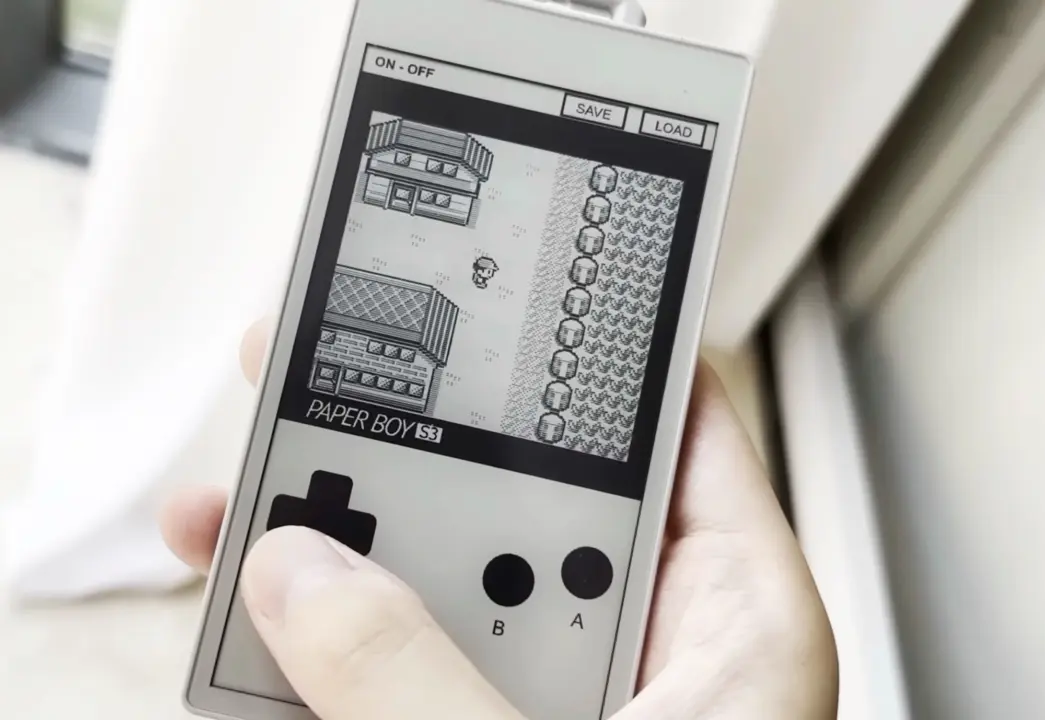
Developer Wenting Zhang has released Paper Boy S3, an open-source project that transforms the M5Stack M5PaperS3 E Ink development kit into a functional Game Boy emulator. This project matters to tinkerers because it demonstrates how software optimization can overcome the inherent slowness of e-paper displays for interactive use. The release offers a practical example of repurposing static-screen hardware for retro gaming.
Selective pixel updates overcome slow refresh rates on e-paper hardware
The core of the project relies on the CrankBoy open-source emulator, which was originally designed for the Playdate handheld. Zhang adapted this software to run on the ESP32-S3 microcontroller found in the M5Stack M5PaperS3 kit. This combination allows the device to interpret classic Game Boy cartridges through software rather than dedicated silicon.
The hardware features a 4.7-inch E Ink touchscreen with a resolution of 960 by 540 pixels. To make gaming viable, the system uses selective pixel updates that only refresh the parts of the screen where graphics change. This technique significantly improves the refresh rate compared to standard e-reader behavior, making the display responsive enough for simple games.
Current testing shows that titles like Tetris and Pokemon run with a playable experience on the device. The project is available as open-source code on GitLab for anyone interested in building or modifying the emulator. While the concept is sound, Bluetooth gamepad compatibility remains very limited at this stage.
Zhang states that the Paper Boy S3 proves e-paper is a viable option for simple handheld gaming devices. The project highlights a clever workaround for low-refresh-rate screens, turning a reading device into a niche gaming tool. Enthusiasts can now explore how selective updates enable smooth gameplay on unconventional hardware.
Source: NotebookCheck