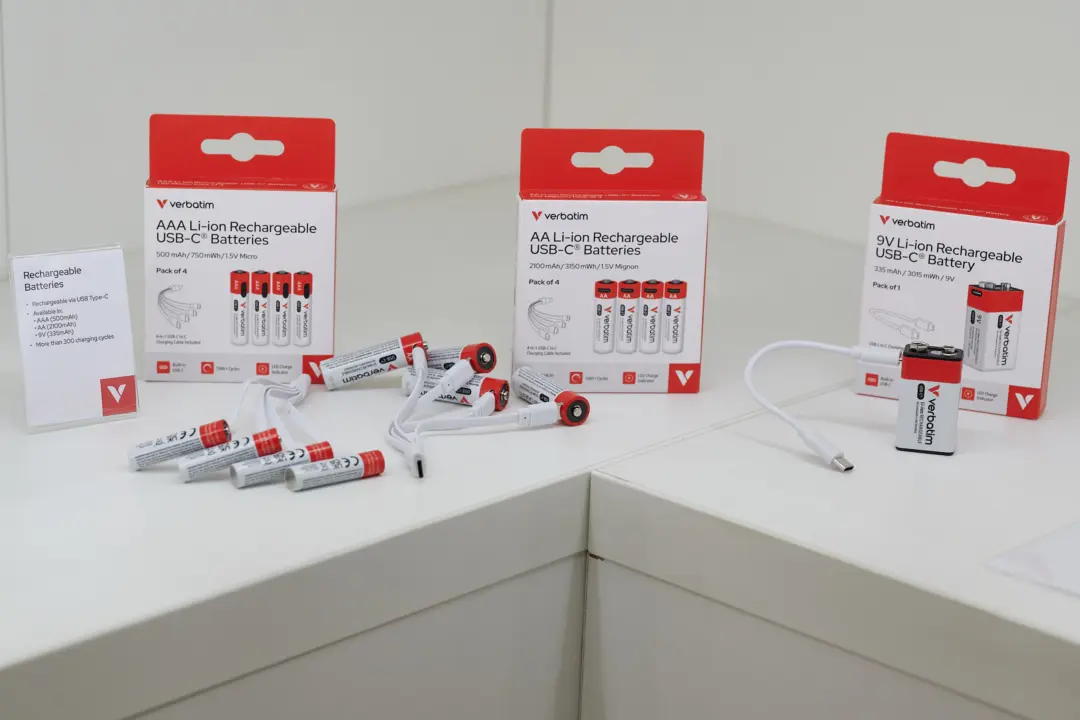
Verbatim is expanding its rechargeable battery lineup with new lithium-ion models that mimic the 1.5V output of standard alkaline cells. This design targets users who need consistent voltage for sensitive electronics that struggle with the lower 1.2V output of traditional nickel-metal hydride batteries. The launch addresses a specific power gap for devices that require stable alkaline-level performance without the waste of disposable cells.
New batteries deliver fixed 1.5V output for sensitive electronics
The new batteries come in AA, AAA, and 9V form factors, each built with lithium-ion cells and integrated voltage converters. Unlike standard rechargeables, these units maintain a fixed 1.5V output for the AA and AAA models and 9V for the larger battery. This constant voltage delivery ensures that devices receive steady power throughout the discharge cycle, unlike the gradual voltage drop seen in other chemistries.
Specifications
- AA Capacity: 3.15Wh
- AAA Capacity: 0.75Wh
- 9V Capacity: 3Wh
- AAA Rated Capacity: 500mAh
- 9V Rated Capacity: 335mAh
Capacity figures vary significantly across the three sizes, reflecting the physical constraints of each cell type. The AA batteries offer a capacity of 3.15Wh, while the smaller AAA models provide 0.75Wh. The 9V battery delivers approximately 3Wh of energy, though its rated capacity is listed at 335mAh. These figures represent the total energy storage available for devices using these specific form factors.
Charging is handled through integrated USB-C ports on all models, eliminating the need for a separate charging dock. Verbatim includes a multi-connector cable with the AA and AAA batteries to facilitate direct charging. The company expects to launch these products globally within the next few weeks, though specific pricing details have not yet been disclosed.
Verbatim has not confirmed whether the batteries simulate a discharge curve like some competitors or maintain a strictly fixed voltage. This technical distinction may matter to users who rely on precise power monitoring for their equipment. The launch marks a shift toward higher-voltage lithium-ion solutions in the consumer rechargeable market.
Source: NotebookCheck