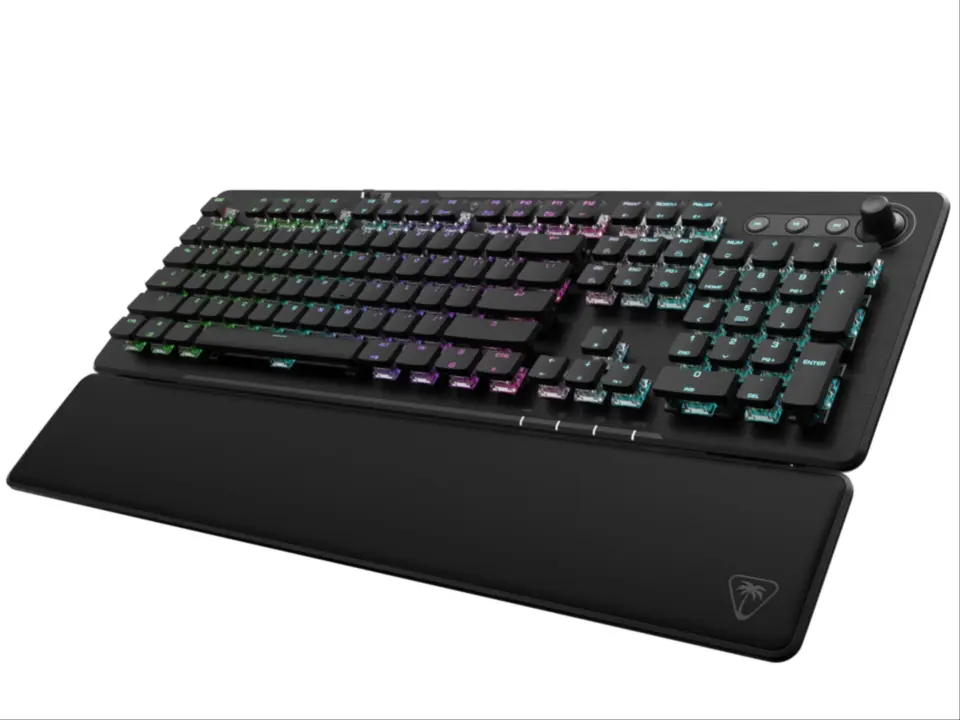
Turtle Beach is adding a wireless option to its Vulcan II keyboard lineup with the new XP Air model, which targets gamers who need long battery life without sacrificing connectivity. The keyboard ships with a massive 6,000 mAh battery that delivers up to 2,000 hours of use when you turn off the RGB lighting and the gesture sensor. This means you can game for weeks on a single charge if you do not need the extra features. Buyers who prioritize endurance over flashy lights will find this configuration practical for long sessions.
New keyboard features gesture sensor and 6,000 mAh battery
The device connects to your PC or console through three different methods, including a 2.4 GHz wireless dongle, Bluetooth, and a wired USB-A connection. It uses hot-swappable Titan HS Red linear switches that actuate at a shallow 1.8mm distance with a 45-gram force. You can swap these switches yourself because the board supports both 5-pin and 3-pin formats. The keyboard also maintains a standard 1,000 Hz polling rate for responsive input.
Specifications
- Switch Type: Titan HS Red linear, pre-lubed, hot-swappable (5-pin and 3-pin compatible)
- Actuation Distance: 1.8mm
- Switch Force: 45 grams
- Polling Rate: 1,000 Hz
- Connectivity: Tri-mode (2.4 GHz, Bluetooth, USB-A)
A standout feature is the AirTrack Gesture Sensor, which allows you to control media playback or detect presence without touching the keys. The keyboard includes a dedicated volume dial and ReacTap functionality for quick access to common commands. A soft, detachable wrist rest sits at the bottom to reduce fatigue during extended play. These hardware controls provide physical alternatives to software-based shortcuts.
Turtle Beach lists the Vulcan II XP Air at 200 USD (around $200) for a global launch on October 25, 2026. The price positions it as a mid-range wireless mechanical keyboard for the gaming market. The company confirmed the release date and pricing through its official channels. This launch expands the Vulcan II series with a focus on wireless flexibility and battery capacity.
Source: Turtle Beach, NotebookCheck
Discussion
0 comments