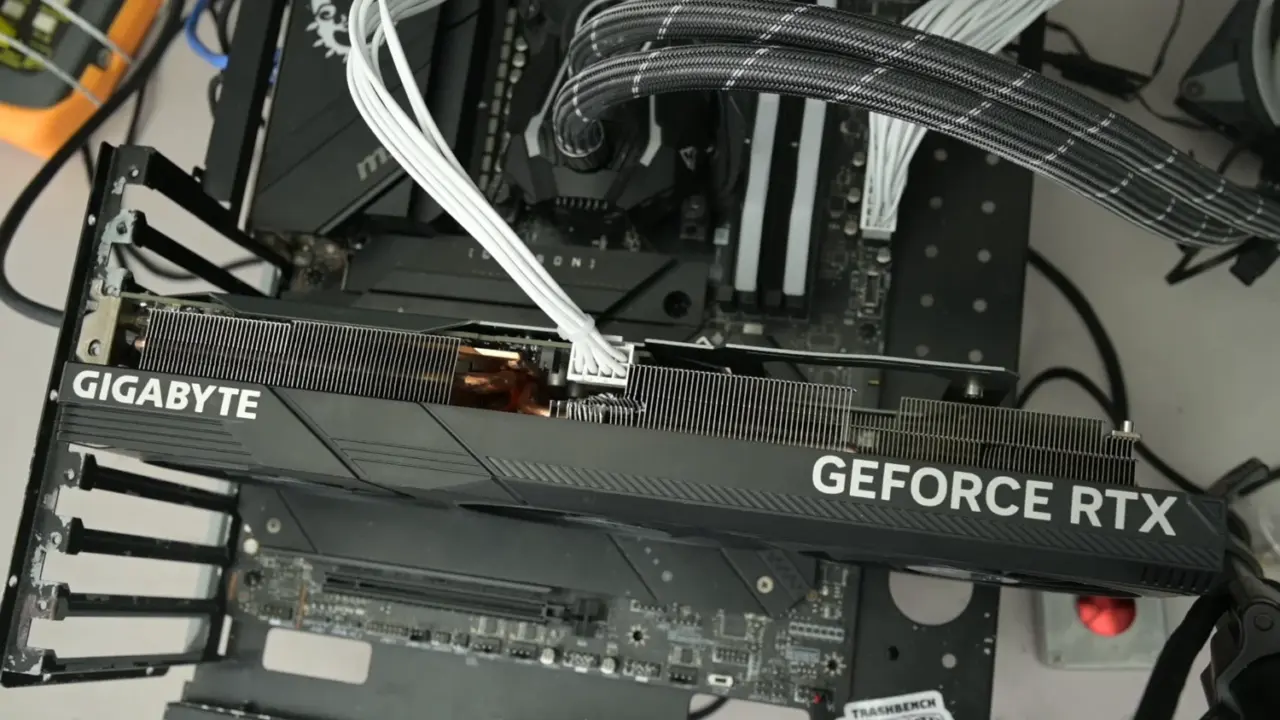
Replacing a standard cooler with a massive flagship unit on a mid-range graphics card offers little practical benefit for gamers. A recent hardware modification experiment demonstrates that oversized cooling solutions do not translate into meaningful performance gains for lower-tier components. This finding matters to builders who might consider upgrading cooling hardware to squeeze out extra frames, as the results suggest the investment yields negligible returns.
YouTuber Trashbench modifies GIGABYTE cooler to test thermal limits
The test involved strapping a GIGABYTE RTX 4090 cooler onto an NVIDIA RTX 3060 PCB. YouTuber Trashbench, known for unorthodox hardware experiments, performed the modification to see if the larger heatsink could improve thermal performance. The process required significant physical alteration, including sawing off mounting parts and heat spreaders to make the oversized cooler fit the smaller card.
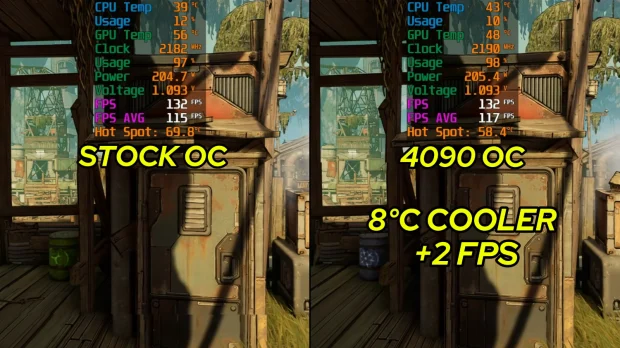
The thermal results showed a clear reduction in operating temperature. Stock temperatures with the RTX 3060 cooler sat at 59C, while the RTX 4090 cooler dropped that figure to 51C, a 9C improvement. Despite the significant drop in heat, the overclocking headroom only increased by 50MHz, moving the clock speed from 2250MHz to approximately 2300MHz.
That small clock bump resulted in a performance gain of just 2FPS in tested games. The improvement was virtually indistinguishable during actual gameplay, confirming that the mid-range GPU does not generate enough heat to benefit significantly from a flagship cooler. The experiment highlights that thermal headroom on the RTX 3060 is already sufficient for its performance level, making extreme cooling modifications unnecessary.
The modification serves as a practical demonstration of diminishing returns in PC hardware cooling. While the RTX 4090 cooler effectively lowered temperatures, it failed to unlock any meaningful performance potential on the RTX 3060. Builders looking to upgrade their cooling solutions should consider the thermal output of their specific GPU before investing in oversized heatsinks.
Source: TweakTown


Discussion
0 comments