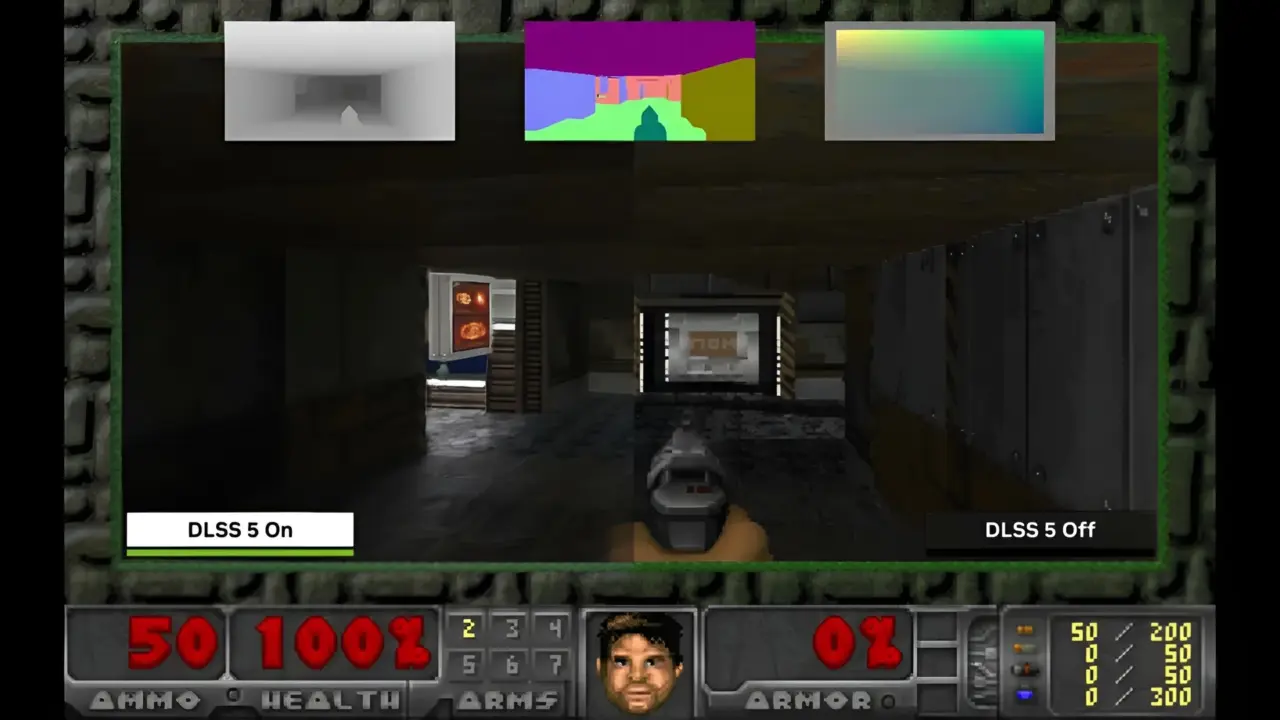
A modder has successfully applied NVIDIA's DLSS 5 technology to the classic DOS game Doom, demonstrating that modern upscaling frameworks can run on legacy software. This achievement matters because it proves the underlying architecture of DLSS 5 is flexible enough to support games that predate the technology by decades. Players interested in retro gaming can now experiment with these enhancements, although the results are mixed. The mod does not offer a polished experience, but it serves as a technical proof of concept for the new standard.
Modder Nikolai Zhivotenko achieves functional build using Linux port and DLSS Swapper
The project relies on a specific setup involving the Linux version of Doom (version 1.10) running through a custom Windows port. This approach bypasses the Steam version of the game, which the modder did not use for this experiment. The core tool enabling this integration is DLSS Swapper, a utility developed by the user rakanki911. This combination of legacy code and modern drivers creates a unique environment for testing.
Testing by MakeUseOf reveals that the mod primarily affects image clarity rather than the game's overall aesthetic. The upscaling improves texture sharpness, making distant objects appear more defined on high-resolution displays. However, the mod does not alter the game's lighting engine or core visual style. The original dark, gritty atmosphere remains intact, with only the resolution scaling being modified.
The implementation introduces significant stability issues that affect gameplay. Viewers will notice visual instability and blur during high-motion sequences, which can distract from the action. CPU usage spikes considerably when the mod is active, leading to inconsistent frame rates and performance drops. These technical hurdles mean the mod is currently more of a curiosity than a viable way to play the game.
Source: NotebookCheck


Discussion
0 comments