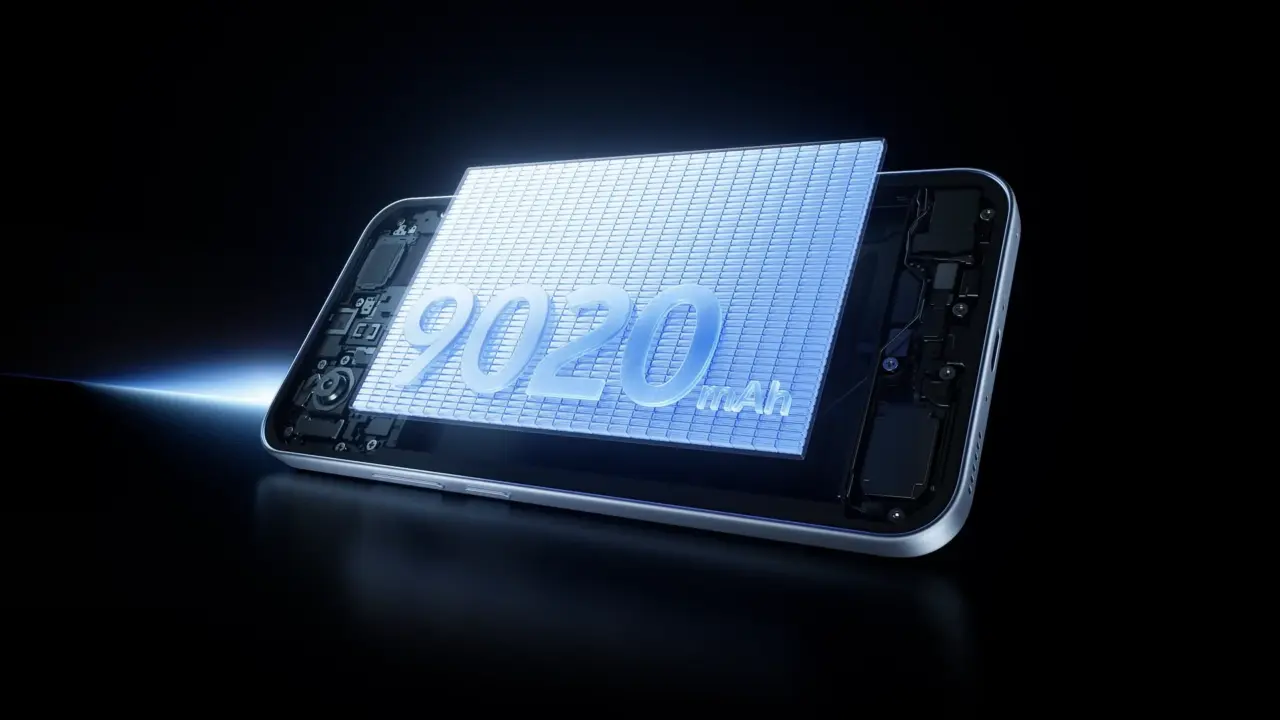
Chinese smartphone makers are pushing battery capacity limits by testing steel-cased batteries paired with stacked-cell construction. This shift matters because it could enable flagships to reach 9,000 to 10,000mAh capacities, addressing a key pain point for power-hungry users. Buyers looking for all-day endurance should watch this development closely as it moves from prototype to potential production.
Steel casing and stacked cells push capacity toward 10,000mAh
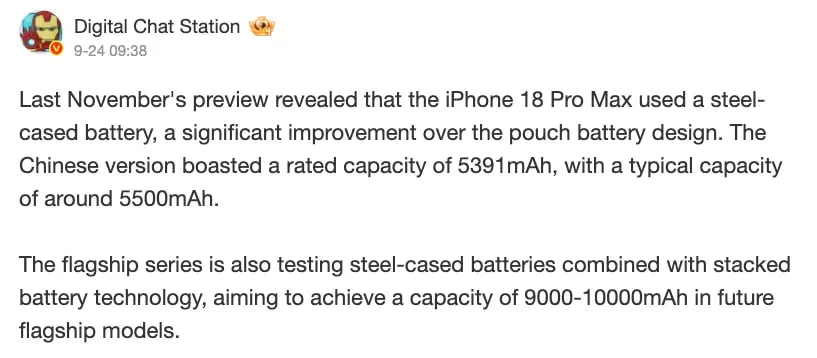
The technology builds on Apple's aluminum-cased battery approach seen in the iPhone 16 Pro but adapts it for the Chinese market. A major Chinese smartphone brand is currently testing these steel-cased designs according to leaker Digital Chat Station. The company is exploring silicon-carbon anode tech alongside the stacked-cell architecture to maximize energy density.
Stacked cells use internal space more efficiently than traditional wound designs, allowing for higher energy density. The steel casing provides structural strength that supports the dense cell arrangement. This combination aims to pack more power into the same physical footprint as current smartphone batteries.
Samsung is also reportedly adopting silicon-carbon tech for its upcoming Galaxy S27 Pro and Ultra models. The Galaxy S27 Pro is expected to land around 5,200mAh, while the Ultra might reach about 5,700mAh. These capacities are lower than the potential 9,000 to 10,000mAh target of the Chinese steel-cased design.
The specific identity of the Chinese brand remains unconfirmed as sources only refer to it as a major manufacturer. There is no official release timeline for these steel-cased batteries yet. The technology is currently in the testing phase with no launch date provided.
Source: GIZMOCHINA
Discussion
0 comments