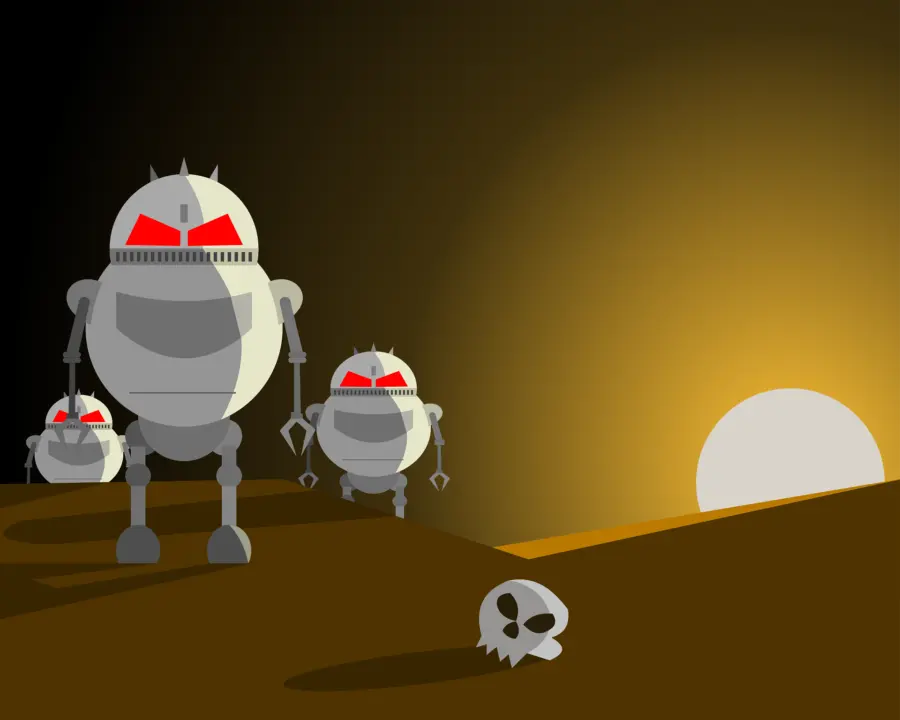
A former Anthropic employee sparked a fresh debate on artificial intelligence safety by posting on X that developers consider human extinction by 2030 possible or even likely. This claim shifts the conversation from abstract risk to immediate existential threat, prompting users to reconsider the long-term implications of deploying increasingly autonomous systems. The post highlights a growing tension between rapid AI advancement and the lack of established safety protocols. These internal industry views directly influence the regulatory landscape and the speed at which powerful models reach the public.
AI models diverge on extinction risks as industry calls for regulation
The discussion centers on how major AI companies define and quantify catastrophic risk. Anthropic, the company behind the Claude model, is at the center of this debate due to the former employee's affiliation. The company itself has characterized the risk of human extinction as 'real and non-negligible' but emphasizes more probable harms such as the concentration of power. This distinction suggests that while existential threats are acknowledged, immediate societal impacts remain the primary focus for safety researchers. The debate reflects internal divisions on where to prioritize safety resources.
Different AI models provide varying estimates for the probability of catastrophic scenarios. ChatGPT assigns a 5 to 10 percent probability to actual human extinction, defined strictly as the end of the species rather than severe economic or political crises. It notes that the risk of humans permanently losing control over significant parts of the world is substantially higher. Gemini offers a more conservative view, consolidating expert opinions to estimate a 10 to 20 percent chance of a catastrophic scenario over the coming decades. These differing probabilities illustrate the lack of consensus within the AI safety community.
Major AI companies are increasingly calling for government regulation and stronger safeguards to mitigate these risks. The industry is moving toward a framework where external oversight complements internal safety research. This regulatory push aims to address the potential for misuse and the unintended consequences of powerful autonomous systems. The focus remains on preventing scenarios where humans lose control over critical infrastructure or decision-making processes. The industry consensus suggests that proactive measures are necessary to manage the rapid deployment of AI technologies.
The current state of AI safety research reflects a mix of caution and urgency. While existential risks are acknowledged, the immediate focus is on preventing power concentration and misuse. The varying estimates from ChatGPT and Gemini highlight the uncertainty surrounding long-term outcomes. Industry leaders continue to advocate for regulatory frameworks to ensure responsible development. The debate underscores the need for clear definitions of risk and robust safety standards.
Source: NotebookCheck



Discussion
0 comments