ACCESSORIES Godox A2 brings 1/8,000s sync xenon flash to iPhones for around $85 AMD Lenovo ThinkCentre M75t Gen 6 adds Radeon RX 6400 graphics in Eurozone, UK, and Singapore GAMES Arkham Horror The Card Game Second Season Gets Blood Token Mechanics in New Russia-Exclusive Campaign DLSS Super Meat Boy 3D update adds DLSS and FSR support alongside crossover character GAMES Mass Effect Legendary Edition multiplayer restored by community mod with 66 characters and 19 maps INTEL Xiaomi Redmi Book 16 2027 swaps Core Ultra for Wildcat Lake Core 5 320 for better battery life ACCESSORIES WALLHACK SP-005 Berserk glass mousepad launches worldwide for $139 GAMES Cosplayer Maria Davydova Brings Baldur’s Gate 3’s Dark Urge to Life in Dark Fantasy Photoshoot STEAM Cleaner Company launches January 26 with four-player co-op sci-fi cleaning chaos STEAM Taskey’s Midnight Toybox turns a child’s bedroom into a deadly board game GAMES The FINALS update makes the announcer call out your actual player name AYN ODIN Ayn Odin 3 Portal handheld features 9,000mAh battery and Snapdragon Q8 for extended emulation PLAYSTATION 5 Saros adds New Game Plus and Boss Rush modes in free Zenith Update GAMES Rockstar trial ends day before GTA VI launch as union accuses studio of hiring informants

LilyGo T-Deck Max Review: $110 E-Ink Smartphone with LoRa and GPS

Owen Carter 1 min read

Discover the LilyGo T-Deck Max, a $110 e-ink smartphone featuring an ESP32-S3 board, LoRa connectivity, GPS, and optional 4G. Ideal for developers and tinkerers.

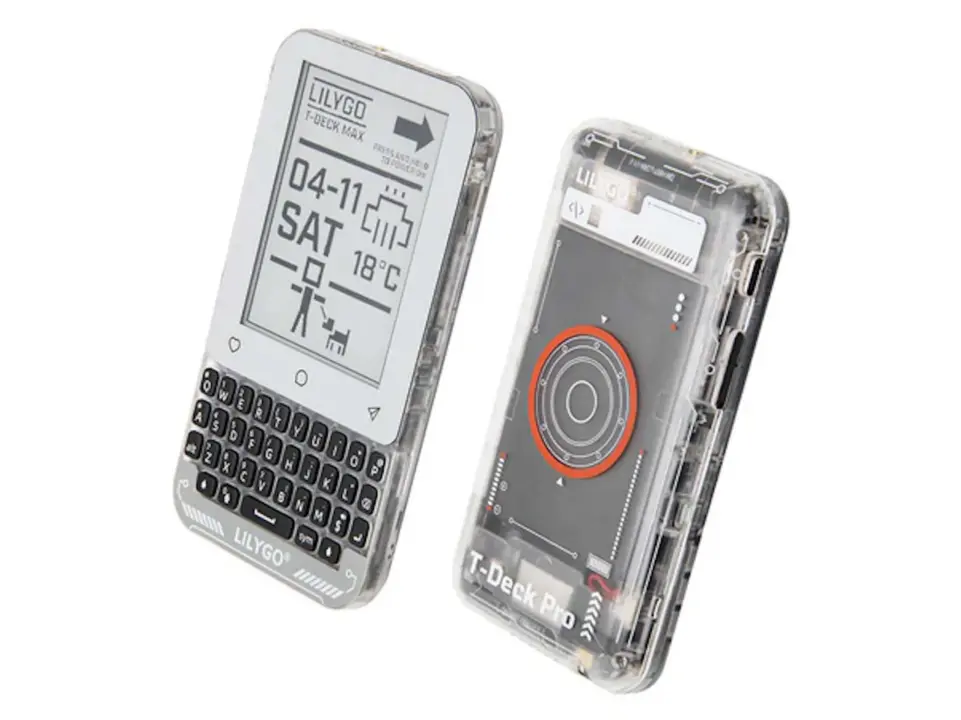
LilyGo has introduced the T-Deck Max, a mobile device that combines e-ink display technology with cellular connectivity options. The manufacturer lists the product at 110 USD (about $110).

Affordable e-ink smartphone features ESP32-S3, LoRa, and optional 4G for tinkerers

The hardware centers on an ESP32-S3 main board and features a 3.1-inch e-ink panel with a resolution of 320 x 240 pixels. It includes a built-in keyboard, microphone, speaker, and a microSD card slot for storage expansion.

Connectivity options prioritize LoRa for independent data transmission alongside an included GPS module. A 4G connection is available as an optional add-on to the core hardware configuration.

The device does not run Android and appears aimed at tinkerers rather than general consumers. Users can program the system using Arduino or PlatformIO IDE environments instead of standard mobile operating systems.

Source: T-Deck Max, NotebookCheck