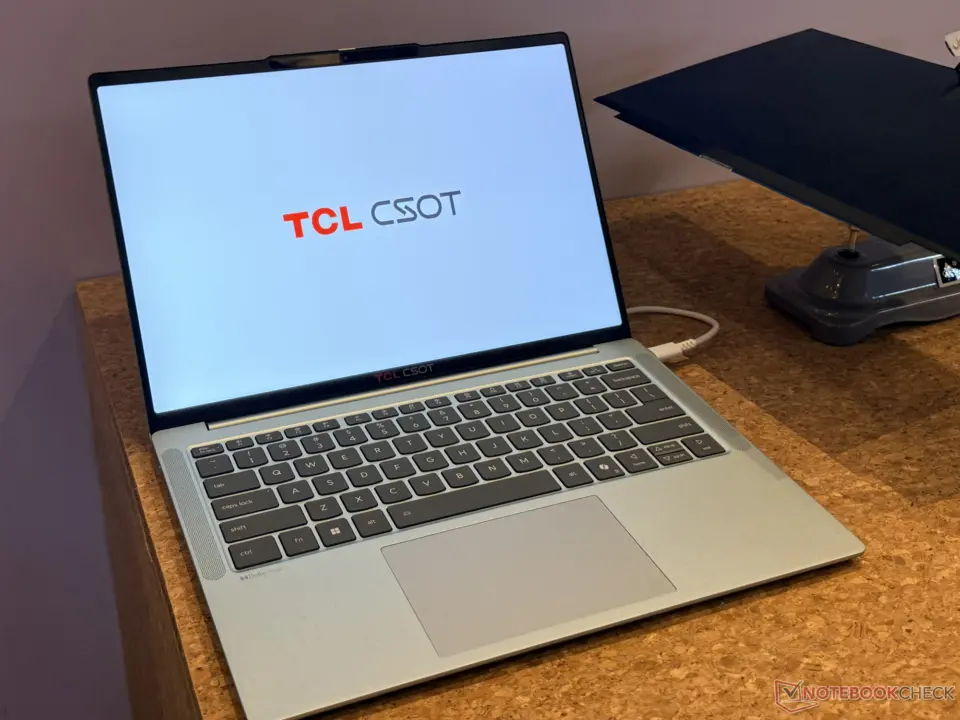
We are seeing a shift in how laptop displays handle power, a change that could extend battery life for thin-and-light machines. A prototype Lenovo Yoga Pro laptop debuted at the DTC 2026 conference showcases a display that draws less than one watt. This ultra-low power consumption stands in sharp contrast to the three to four.5 watts typical of standard 14-inch IPS screens. Buyers who prioritize all-day mobility will find this efficiency gain significant for their daily workflow.
Prototype showcases ultra-low power 14-inch 120Hz display
The Lenovo Yoga Pro prototype features a 14-inch panel with a 1920×1200 resolution and an adaptive 120Hz refresh rate. This configuration balances visual smoothness with energy conservation, targeting users who need responsive performance without heavy power costs. The device represents a collaborative effort between Lenovo and TCL CSOT to demonstrate next-generation display technology. We have tracked the Lenovo Yoga Pro line closely, noting its positioning in the premium consumer market alongside competitors like the MacBook Pro 16.
Prototype Specifications
- Display Size: 14-inch
- Resolution: 1920×1200
- Refresh Rate: 120Hz
- Power Consumption: under 1W
- Brightness: 300-400 nits
Technical specifications for the display module highlight a weight of just 100 grams. This is significantly lighter than the 250 to 350 grams found in typical 14-inch IPS LCDs. This reduced mass allows for slimmer device enclosures and enhanced portability. The display brightness is estimated to range between 300 and 400 nits, though exact ratings remain unconfirmed by the manufacturer.
Laptops featuring this power-efficient display are expected to enter the global market in 2027. There is currently no concrete word on the exact release date for the Lenovo Yoga Pro model itself. The prototype serves as a proof-of-concept for the industry, demonstrating that high-refresh-rate panels can operate in the milliwatt class. The display is expected to enter the market in 2027, with its low power consumption potentially extending battery duration.
Source: NotebookCheck

A 14-inch 120Hz screen pulling under 1W sounds like a miracle for battery life but 300 nits is really dim for indoor use. Will this panel ever hit 400 nits without spiking the power draw back up to normal levels?
The 1W figure is for the LCM module itself. If you factor in the backlight and driver overhead you are likely looking at 2W total. That is still a win over standard IPS but do not expect cinema-grade brightness from a 100 gram panel.