
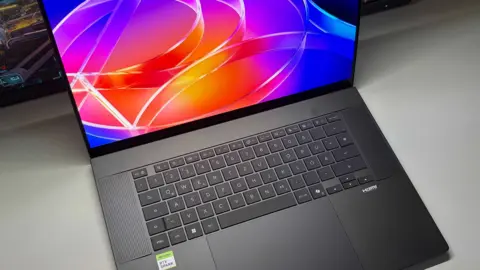
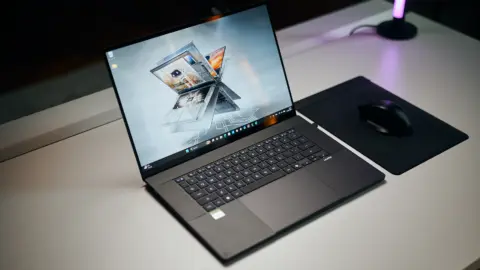
Apple launched a new 14-inch and 16-inch MacBook Pro on November 6th, offering significant display improvements and reduced weight for professionals. The new Tandem OLED displays provide improved brightness and support touch input for the first time on the MacBook Pros. This is a significant update that'll be interesting for people looking to get a laptop workstation with improved visual fidelity and touch support for their workflow.
Apple updates MacBook Pro 14 and 16 with M5 chips, thinner designs, and new OLED screens
The new 14-inch and 16-inch models update the existing ones with the new Apple M5 Pro and M5 Max chipsets. Apple also focused on reducing the weight and thickness of the new MacBook Pro models without sacrificing the battery capacities. The 14-inch laptop weighs 1.4 kg and has a thickness of 15 mm.
Spec comparison
| Spec | MacBook Pro 14-inch | MacBook Pro 16-inch |
|---|---|---|
| Display | PROLED XDR (Tandem OLED), up to 2,000 nits peak | PROLED XDR (Tandem OLED), up to 2,000 nits peak |
| Processor | M5 Pro | M5 Max |
| Weight | 1.4 kg | 1.84 kg |
| Thickness | 15 mm | 16 mm |
| Starting Price | $2,899 | $3,399 |
The 16-inch weighs 1.84 kg and is 16 mm thick. Compared to the earlier models, it's a drastic drop in size.
Apple calls the new display the PROLED XDR Display, which is based on Tandem OLED technology. The display offers a variable refresh rate between 10 to 120Hz and a peak brightness of 2000 nits. It also has a sustained full-panel brightness of 1000 nits for content creation. The new MacBook Pro models are powered by Thunderbolt 5, Wi-Fi 7, and MagSafe connectivity. macOS 27 Golden Gate has also been optimized for multitouch gestures.
The new 14-inch MacBook Pro is priced at $2899, and the 16-inch is priced at $3399. The pre-order for the models went live earlier in the day, and the shipments will start on 6th November. The 14-inch model comes with a 72.6 Wh battery, and the 16-inch model comes with a 100 Wh battery. Despite the thinner design, the battery capacities of the new models are the same as the previous ones.
As we had seen some performance comparisons of M5 Pro in different use cases before. The new MacBook Pro models are now available with the updated hardware and displays. This is the new norm for Apple's professional-oriented laptops.
Source: NotebookCheck

Touch support on a pro workstation is a feature request that never dies. I am curious how macOS 27 Golden Gate handles input priority when a stylus or finger touches the display while a trackpad gesture is active. The kernel driver stack needs to be very careful here.
The 1.4 kg weight for the 14 inch model is actually impressive tbh. I was expecting it to stay heavier. The price is still steep but the display upgrade alone might justify the wait for my current rig.
tandem oled on a laptop that weighs under 1.5kg is wild. i assume the thermal headroom for that peak 2000 nit burst is tight. 🤔
Does the 100 Wh battery in the 16 inch model last longer than the previous gen? I need a machine that can survive a full day of editing without a charger. How is the power efficiency with the M5 Max chip?
Battery capacity is identical to the last generation. Apple claims efficiency gains from the M5 Max, but sustained workloads will drain it fast. Expect 8 to 10 hours of mixed use at best.
I am skeptical about the 1000 nits sustained full panel brightness claim. OLED panels usually throttle heavily to prevent burn in. This spec sheet looks like marketing fluff until we see real world benchmarks.
Touch support is nice but do the on screen controls feel responsive enough for serious work? I am worried about accidental touches while typing on the new 15 mm chassis.
Thunderbolt 5 support is the real win here. The bandwidth increase will make external GPU setups and high res docks viable again. It is a solid upgrade for the pro workflow.