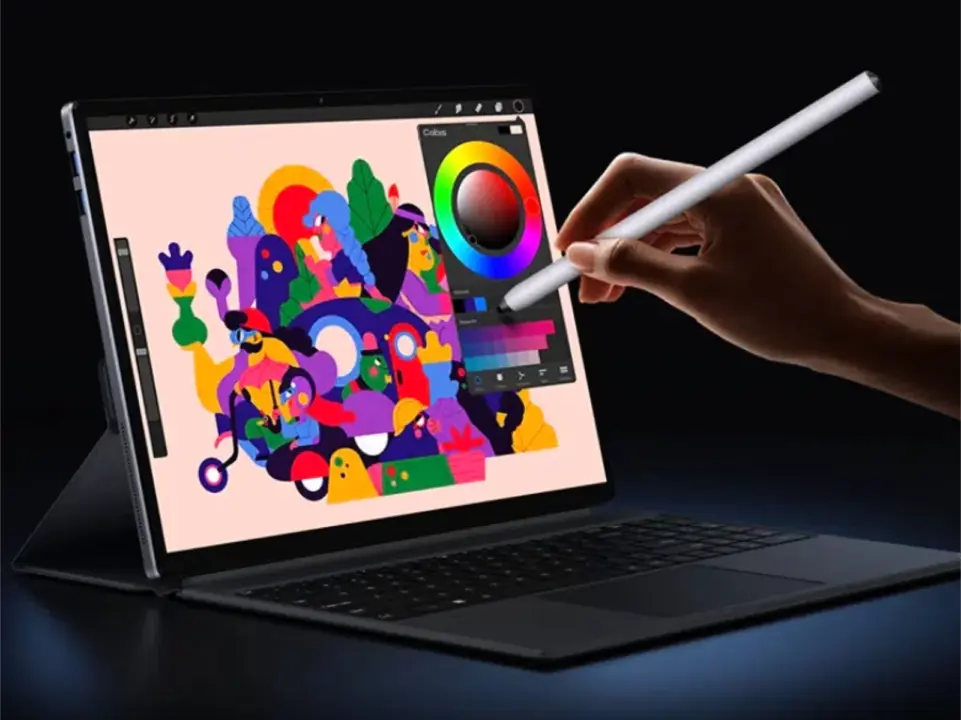
The market for large-screen 2-in-1 laptops just gained a new contender with the launch of the Founder 16-inch 2-in-1. This device targets users who find standard tablets too small for serious productivity but still want the flexibility of a detachable form factor. It positions itself as a direct alternative to premium devices like the Surface Pro, offering a significantly larger display for a fraction of the typical cost.
Large-screen 2-in-1 targets productivity with Intel N100 and 16 GB RAM
Founder built this machine around an Intel Processor N100 from the Alder Lake-N family. The system pairs this entry-level CPU with 16 GB of RAM and a 512 GB SSD for storage. This configuration prioritizes basic multitasking and media consumption over heavy computational workloads, making it suitable for students or casual office workers who need a portable secondary device.
Specifications
- Display Resolution: 2,560 x 1,600 pixels
- Processor: Intel Processor N100
- RAM: 16 GB
- Storage: 512 GB SSD
- Weight: 1.2 kg
The standout feature is the 16-inch display, which resolves at 2,560 x 1,600 pixels in a 16:10 aspect ratio. The panel supports a 60 Hz refresh rate and reaches 300 nits of peak brightness. The chassis is remarkably thin at 12 mm and weighs just 1.2 kg when excluding the stand and keyboard, ensuring the device remains portable despite its large screen size.
Connectivity includes dual USB 3.2 Type-A ports, a Type-C port, a microSD card slot, and a 3.5 mm audio jack. Power comes from a 46 Wh battery, which translates to 6,000 mAh capacity. While the device includes a detachable stand and keyboard in the box, performance benchmarks show the N100 delivers less than half the performance of a Snapdragon X Plus chip, highlighting the trade-off between screen size and processing power.
The Founder 16-inch 2-in-1 retails for CNY 3,999 (around $596) in China. This price point includes the detachable accessories, which are often sold separately by competitors. International launch details remain unknown at this stage, so availability outside of China is currently unconfirmed.
Source: NotebookCheck
Discussion
0 comments