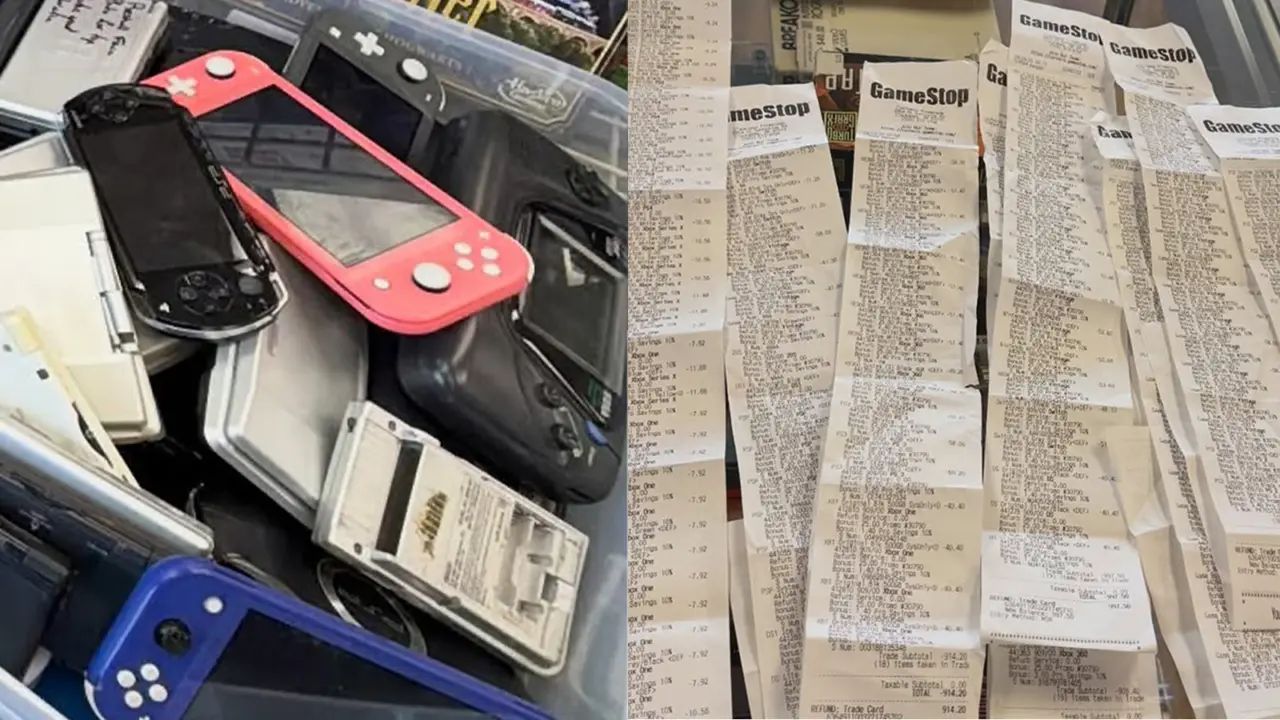
GameStop turned a mountain of broken gaming hardware into a massive store credit haul this week. A single customer in Clackamas, Oregon, exchanged hundreds of discarded consoles for over ten thousand dollars in trade value. This unusual transaction highlights the extreme end of the console trade-in market, showing that even non-functional units can hold significant monetary weight for retailers looking to recycle parts.
Customer exchanges hundreds of discarded units for massive credit haul
The event centers on a GameStop location in Clackamas, Oregon, where a customer named Josh completed a massive trade-in. GameStop posted about the transaction on social media, thanking Josh for his contribution of junk hardware. The retailer accepted the broken units, which likely serve as donor parts for repairs or refurbishment, rather than reselling them as working consoles.
The financial details of the trade-in are notable. GameStop issued $10,690.06 in store credit for the hundreds of broken consoles. This valuation suggests a bulk pricing model for non-functional electronics, where the aggregate value of components outweighs the cost of processing. The store credit can be used for future purchases at GameStop, keeping the customer within the retailer's ecosystem.
GameStop announced the transaction on August 17, 2026, sharing the details on its official social media channels. The post included a direct message thanking the customer for their junk, framing the event as a humorous yet impressive feat of recycling. This trade-in stands out as a rare example of high-volume hardware disposal, contrasting with typical individual console trades that yield much smaller credits.
The trade-in program demonstrates that broken consoles retain value through their internal components. Customers with large collections of discarded hardware may find that bulk disposal yields better returns than individual sales. GameStop's willingness to accept such a large volume of non-functional units highlights the logistical scale of their recycling operations.
Source: DEXERTO