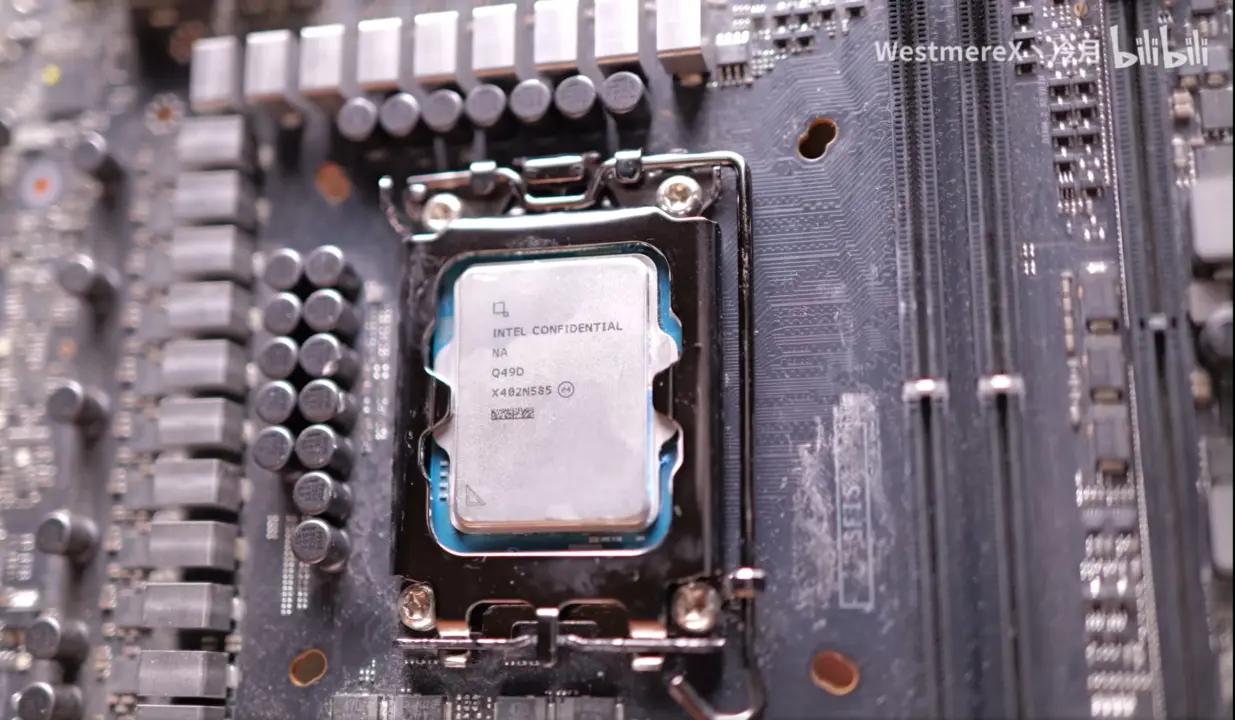
Intel quietly shelved a prototype processor that would have offered a rare all-performance-core configuration for embedded systems. The chip, known as the Core i9-14901KE, never reached retail shelves or an official product listing, yet it reveals how the company handled scheduler compatibility in industrial control software. Buyers interested in extreme overclocking or specialized industrial hardware should note that this silicon remained a qualification sample rather than a commercial product.
The qualification sample features eight performance cores and an unlocked multiplier
The processor is built on the Raptor Lake Refresh architecture and features eight Performance cores with 16 threads. It carries a 125 W thermal design power and includes an unlocked multiplier, which is unusual for embedded market parts. The specific sample we examined carries the revision code Q49D. This configuration effectively removes all Efficiency cores to simplify scheduling for legacy industrial applications.
Specifications
- Cores: 8 Performance cores
- Threads: 16
- TDP: 125 W
- Multiplier: Unlocked
- Architecture: All-P-core (Efficiency cores disabled)
Performance testing shows the chip behaves almost identically to a standard Core i9-14900K with its Efficiency cores manually disabled. At stock settings, the processor runs at 5.5 GHz and delivers Cinebench R23 scores that match the modified 14900K. Manual overclocking to the rated 5.8 GHz boost frequency yields roughly 1% gains in single-core performance and under 6% in multi-core performance. These results confirm that dropping Efficiency cores does not significantly alter the core performance profile of the remaining P-cores.
Extreme cooling methods allowed the silicon to reach much higher frequencies than standard operation permits. When cooled to -100°C, the chip stabilized at 7.4 GHz and completed a SuperPI 1M run at 6.9 GHz. This demonstrates the high headroom available in the Raptor Lake Refresh design when thermal constraints are removed. The chip was listed in press materials in mid-2024 but was quietly shelved before any official launch.
The Intel Core i9-14901KE serves as a technical footnote in Intel's product history rather than a market-available component. It confirms that the company explored all-P-core variants for specific industrial compatibility needs. The silicon remains a qualification sample with no public pricing or availability.
Source: NotebookCheck