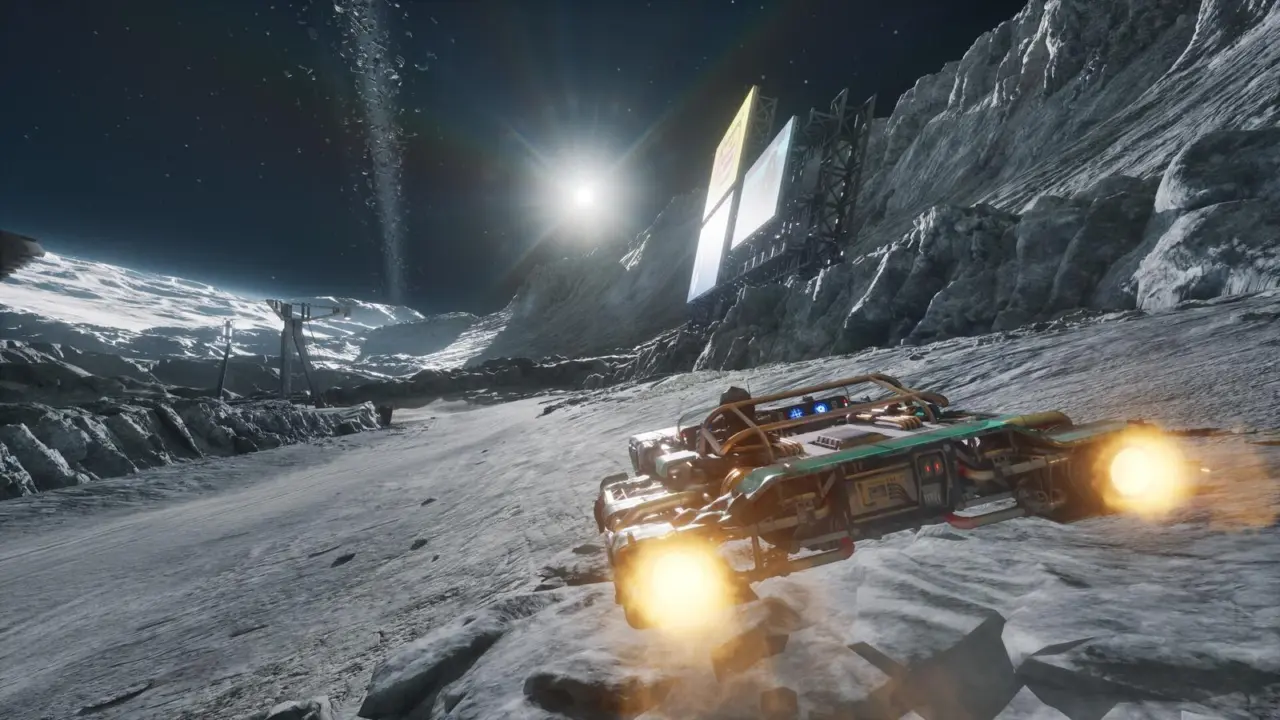
Fuse Games released Star Wars Galactic Racer on PC, PS5, and Xbox Series X/S with a design philosophy that rejects the constant dopamine loops found in many modern racing titles. The studio argues that traditional reward structures eventually lose their impact on players who must manage complex cognitive loads at high speeds. This approach aims to make the experience feel more immersive and less like a checklist of tasks. Players who prefer a slower, more atmospheric journey through the Star Wars universe may find this shift refreshing compared to standard arcade racers.
Fuse Games head Matt Webster argues that constant dopamine rushes dull player senses
The game places players in the role of a pod racer navigating the dangerous tracks of the Outer Rim. Developer Matt Webster, head of Fuse Games, criticized the repetitive reward systems seen in games like Burnout, where constant car and reward pickups dull the senses over time. He believes that modern racing games demand too much multitasking, requiring players to monitor accelerators, ability cooldowns, and vehicle malfunctions while pushing speeds up to 700 km/h. The studio designed Galactic Racer to reduce this pressure by balancing intense racing sequences with calmer moments to build atmosphere.
A core feature of the game is its reimagining of finishing positions. Instead of treating lower placements as failures, the game encourages players to take pride in fifth-place finishes after surviving particularly difficult races. This design choice supports the studio's goal of creating a more narrative-driven experience rather than a pure skill-based grinder. The game alternates between high-speed action and quieter segments to maintain player engagement without overwhelming them with constant mechanical demands.
Star Wars: Galactic Racer is now available for purchase on PC, PlayStation 5, and Xbox Series X/S. The release marks a distinct departure from the high-stimulation, reward-heavy models that dominate the current racing genre. Fuse Games hopes this shift will resonate with players who feel fatigued by the constant need for optimization and rapid reaction times. The game stands as a complete package that prioritizes atmosphere and resilience over constant mechanical gratification.
Source: Star Wars, IXBT