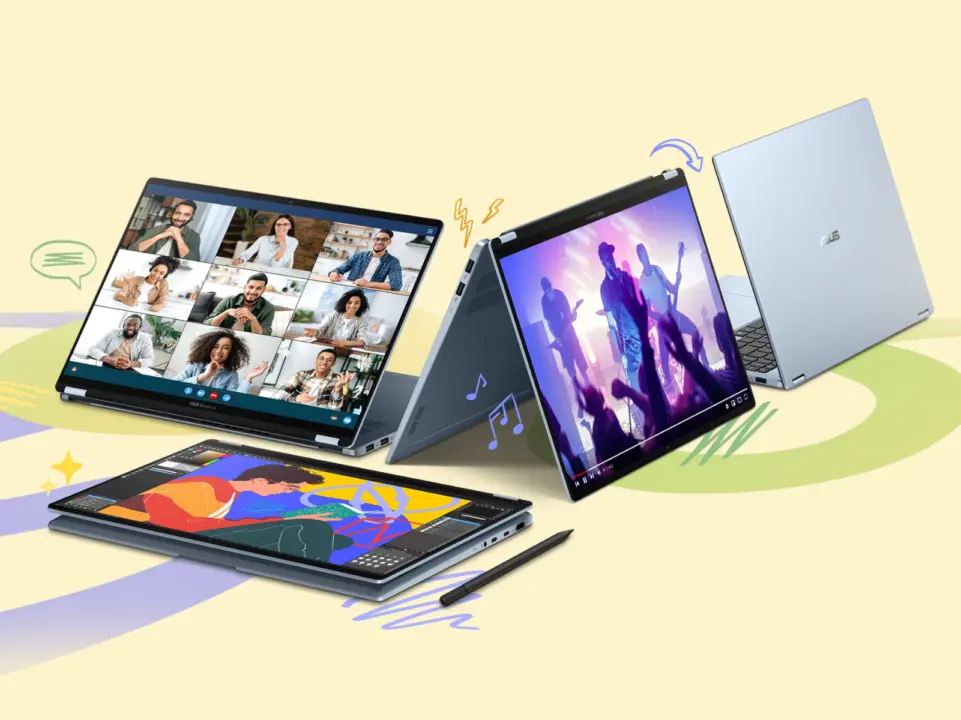
Asus has unveiled four new laptops in its Vivobook lineup: the S14 (S5408), S16 (S5608), S14 Flip (TP5408), and S16 Flip (TP5608). The update brings Qualcomm Snapdragon X1P-26-100 processors to a broader range of form factors, including convertible designs. These laptops target Windows on ARM users seeking extended battery life and mobile connectivity rather than traditional processor speed.
Four new models feature Snapdragon X1P-26 processors, OLED screens, and up to 512 GB storage options.
The new models share a common internal architecture centered around the Snapdragon X1P chip. Asus equips all four laptops with 16 GB of soldered LPDDR5X RAM, which limits upgradeability but supports low power states. Storage options cap at 512 GB via PCIe 4.0 drives, and each device houses a 50 Wh battery pack to sustain extended usage.
Display technology remains consistent across the lineup with OLED panels. The company has not released specific details regarding screen resolution or refresh rates. Asus highlights the screens' suitability for bright environments, but specific brightness measurements remain unconfirmed in the announcement.
Additional features include Wi-Fi 6E and Bluetooth 5.3 support for connecting wireless devices. These devices operate on Windows 11 using processor-specific drivers designed for efficient heat management. Asus claims the devices can play 1080p video at 150 nits for over 25 hours on a single charge, a figure that relies on specific power-saving configurations.
Pricing and release dates remain unconfirmed as of this announcement. Pricing and retailer information for the new models have not yet been announced by Asus. Asus plans to announce release dates nearer to when the laptops become available for purchase, potentially later this year.
These new models succeed previous versions that faced challenges with application support and system integration. The updated processor improves upon earlier designs by reducing heat-related performance slowdowns common in previous models. The company markets these laptops as practical options for customers requiring long-lasting power throughout the day.
While the announcement introduces four new models, specific information regarding size, connection options, and coverage remains unavailable. The company has not published performance comparisons between this processor and competing chips from other manufacturers. Market watchers will likely assess user experiences with software compatibility to evaluate the success of this new system.
Source: Asus, NotebookCheck