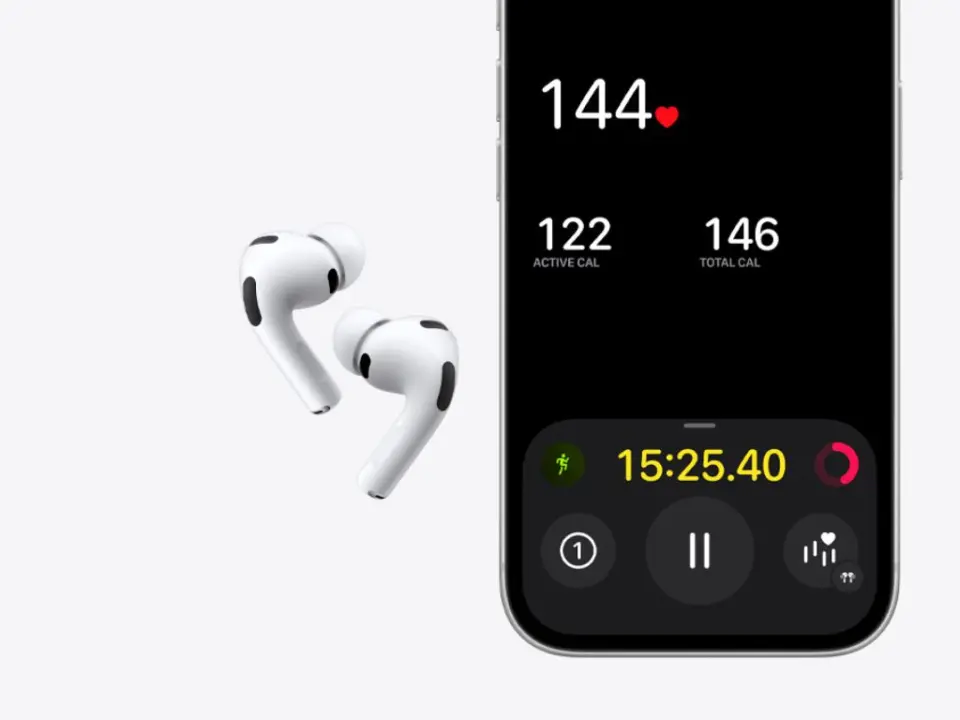
A Chinese research project has developed AccLock, an earbud system that authenticates users through their unique heart rhythm signals. The prototype uses a tiny accelerometer to capture Ballistocardiography (BCG) data from the inner ear. This technology aims to provide passive biometric verification without requiring active user involvement.
Chinese researchers developed a prototype system using earbuds to verify identity through unique heart rhythm signals.
Testing with 33 participants showed an average False Acceptance Rate of 3.13% and a False Rejection Rate of 2.99%. The system performed better on custom 3D-printed earbuds than on commercial Apple AirPods due to data quality differences. Retraining the model allowed the buds to learn user patterns after periods of idle sitting.
Physical activity negatively impacts accuracy because movements like walking, jogging, or jaw motion introduce vibrations that interfere with signal detection. The research team notes that the current sample size is too small to draw broader conclusions about real-world viability. No official peer-reviewed documents currently exist to benchmark these results against competitor claims.
AccLock remains a proof-of-concept research trial and no commercial products are shipping with this technology. The project highlights emerging possibilities for in-ear biometric security while underscoring the need for further validation before widespread adoption.
Source: NotebookCheck