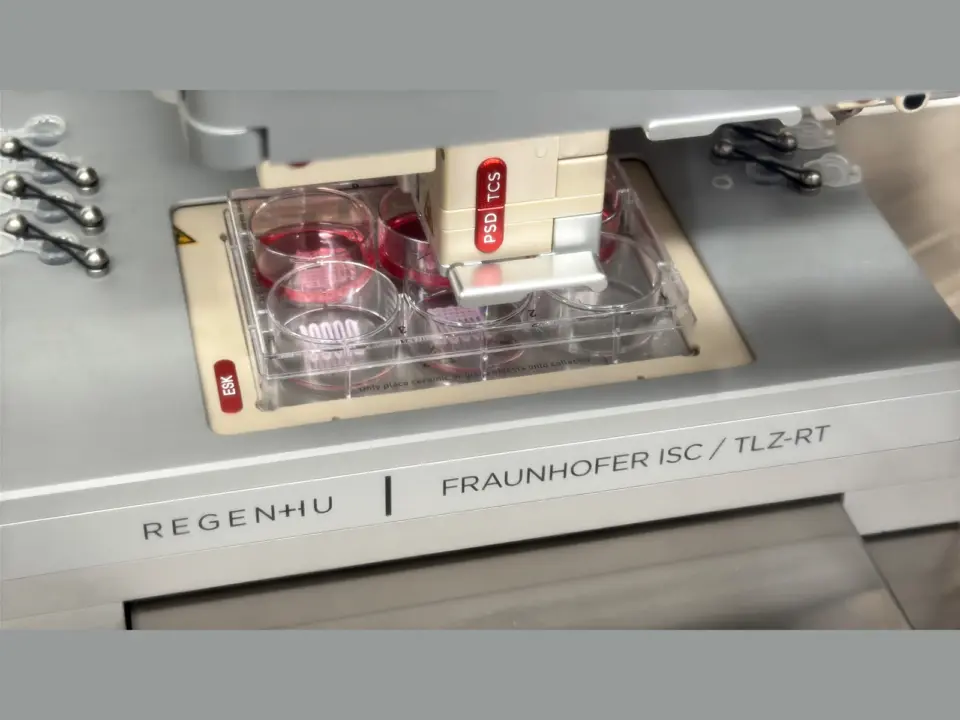
Researchers at the Fraunhofer Institute have advanced 3D bioprinting by creating bio-inks that mimic natural human tissue. This development matters because it moves organ fabrication closer to reality using materials found in the body. Scientists can now print structures that behave like living skin rather than static plastic models. The technique relies on temperature changes to guide molecular organization during the printing process.
PhysioINK project stabilizes collagen for 3D printed skin tissue models
The project, known as PhysioINK, focuses on stabilizing collagen molecules for better printability. It uses cellulose sulfate to maintain the structure of these proteins before they are deposited. This method avoids synthetic polymers or chemically modified substances that might trigger immune responses. The approach prioritizes physiological proteins to ensure the printed tissue integrates naturally with the body.
Collagen and elastin form the core components of these new bio-inks. When the temperature shifts during printing, the collagen self-organizes into fibrous tissue structures. This self-assembly process replicates the natural architecture of human skin. The result is a 3D-printed model that exhibits the structural integrity of real biological tissue.
Early tests have successfully produced 3D-printed skin tissue models using this method. These models demonstrate the potential for creating more complex organs like hearts or kidneys in the future. The technology currently supports the creation of stable, fibrous networks without additional chemical cross-linking. This stability is essential for preserving the structural integrity of bioprinted organs during tissue maturation.
The Fraunhofer Institute continues to refine these bio-inks for broader medical applications. Researchers aim to scale this technique for transplantable organ production. The current focus remains on validating the structural and biological compatibility of the printed tissues. Success in skin models provides a foundation for testing more vital organ systems.
Source: NotebookCheck
Discussion
0 comments