Samsung is changing how it builds foldable screens by swapping out the usual plastic support layers for titanium. This shift matters because it directly targets the most visible flaw in current foldables: the deep crease that forms when you bend the device. Buyers who prioritize screen integrity and a smoother viewing experience should watch for this upgrade in upcoming models.
Titanium-alloy film replaces polymer support layer in next foldables
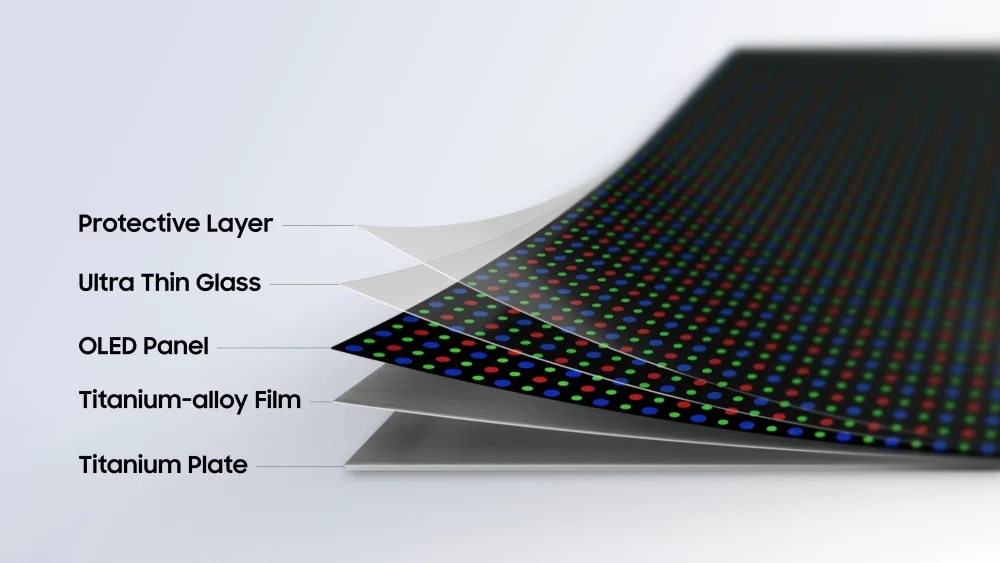
The core of the new approach is a component Samsung calls Flex Titanium. It sits directly beneath the OLED panel and replaces the conventional polymer support layer found in previous generations. This structural change allows the display to maintain its shape while folding without adding bulk.
Flex Titanium Specifications
- Material Composition: Titanium-alloy film and titanium plate beneath OLED panel
- Mechanical Stiffness: 20 times higher than conventional polymer support layer
- Film Thickness: Roughly one-third the thickness of a human hair
- Display Architecture: New high-resolution architecture and next-generation organic materials
Samsung says the titanium-alloy film delivers around 20 times higher mechanical stiffness than the old polymer design. Despite this strength boost, the film remains extremely thin at roughly one-third the thickness of a human hair. The company also redesigned the titanium plate beneath the OLED to remove air gaps, which helps reduce crease visibility.
Beyond the metal frame, Samsung upgraded the display with a new high-resolution architecture and next-generation organic materials. These changes are designed to lower power consumption, making the display more energy efficient. According to Samsung, the new construction also helps reduce crease visibility and improves the overall viewing experience.
Samsung stated that Flex Titanium is the result of seven generations of foldable display development. The technology will make its commercial debut on Samsung’s next Galaxy foldable devices. We do not know the exact model name yet, but the company plans to reveal it at an upcoming Unpacked event.
Source: GIZMOCHINA